
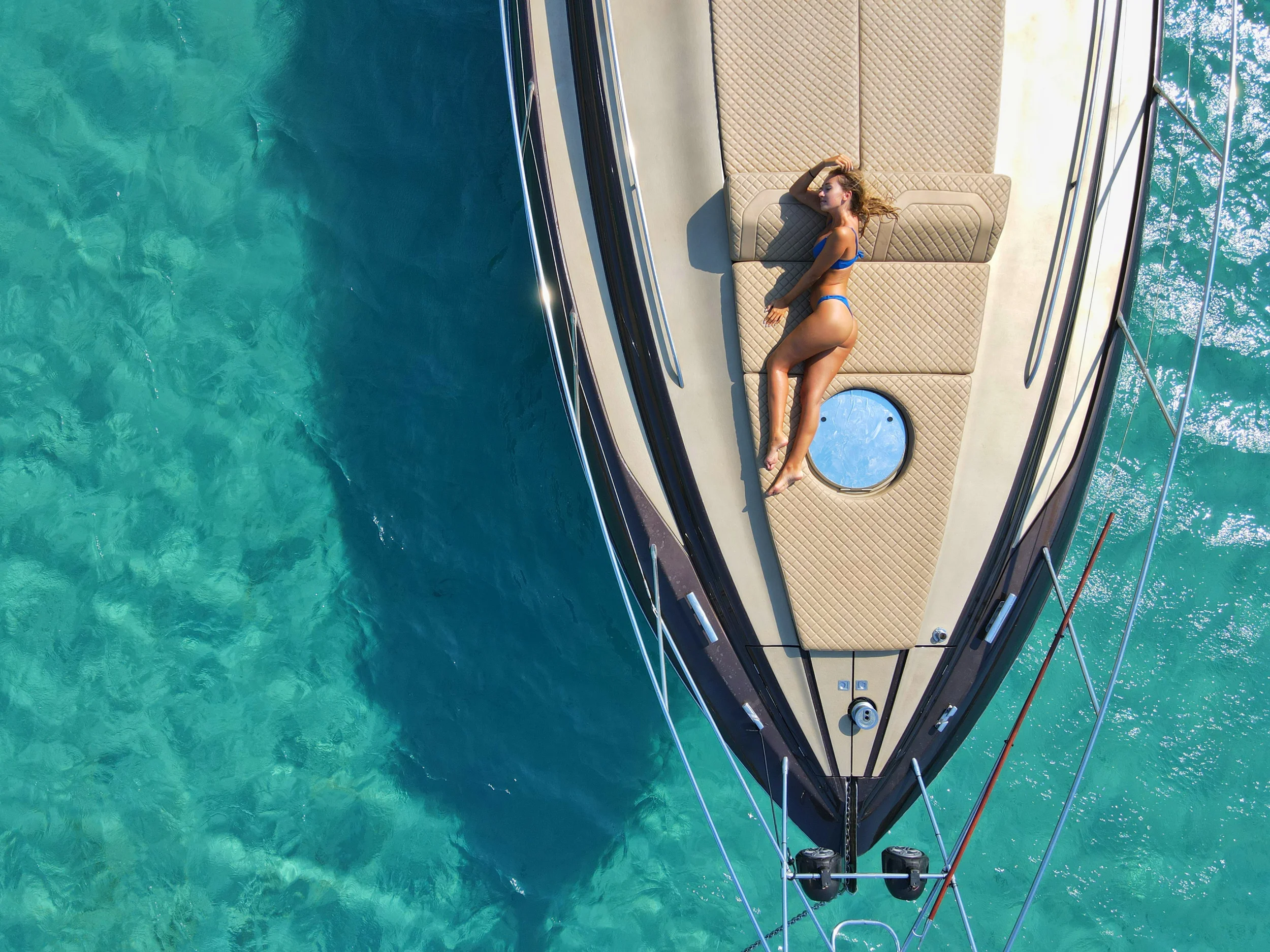

Split has more crewed yachts on our books than any other port. Here is why the middle of the Dalmatian coast works so well for a charter week, which islands a week actually covers, and what sort of boats are based there.
Split is the busiest charter port on the Adriatic and the port with more yachts on our books than any other. The reason is geography. Sail out of the harbour and you have Brač, Šolta and Hvar within a couple of hours, Vis beyond them, and Korčula and the Pelješac peninsula within reach by midweek. The islands sit close together and mostly shelter each other, so the water between them stays workable even when the open Adriatic is not.
The city earns its own day. Diocletian's Palace is not a ruin behind a fence, it is the middle of a working town, with bars and apartments built into a Roman emperor's walls. Most guests take the first evening ashore there before the boat leaves on Sunday.
Why Split works as a base
The islands are close. Passages between the Dalmatian islands are typically one to three hours. You are not committed to a long day at sea to reach the next anchorage, which changes what the week feels like. Swim in the morning, move after lunch, be tied up by mid-afternoon.
It is a real transport hub. The airport sits on the coast a short drive from the harbour, and the city is the main ferry port for the whole coast. Getting a group of ten to the boat is simpler here than almost anywhere else in the Adriatic. Our guide to reaching a charter from Scandinavia covers the travel side.
Provisioning is easy. Split has a proper market and suppliers used to yacht crews. Your crew can restock mid-week without a detour.
Where a week from Split goes
Brač. The first stop for many boats, and the one with the postcard beach. Zlatni Rat at Bol shifts its shape with the current, which is more interesting in person than it sounds. The north side of the island has quieter bays if the beach is not the point.
Hvar. The busiest island in Dalmatia and the one guests ask for by name. The town is genuinely lively in season and the Pakleni Islands just offshore are where you go when it is not. Anchoring in the Pakleni and tendering in solves the problem of Hvar in August.
Vis. Further out, and the island that rewards the extra passage. It was closed to foreign visitors until the late 1980s as a Yugoslav military base, which is why it feels less developed than its neighbours. Komiža and Vis town are both working harbours. The Blue Cave on nearby Biševo is worth an early start to beat the tour boats.
Korčula. South and east, a walled town on a promontory that repays a night alongside. This is usually the turning point of a seven-day loop, or the halfway mark if you are running one-way down to Dubrovnik.
The Kornati. North-west instead of south, and a different sort of week. The archipelago is a national park, largely bare and largely uninhabited, and the sailing between the islands is open and quiet in a way the Hvar run never is. From Split it costs a day up and a day back, so it suits a group that wants space rather than towns. Šibenik sits closer if the Kornati are the main reason for the trip.
A week comfortably covers Brač, Hvar and Vis with time to stop where you like. Ten days lets you carry on to Korčula and finish at Dubrovnik without rushing the middle. Point the week north-west instead and the Kornati replace Vis and Korčula, which is the quieter version of the same seven days.
Wind and weather
The Adriatic summer is dominated by the maestral, a thermal north-westerly that builds through the middle of the day and dies in the evening. It is reliable, moderate and the reason afternoon sailing here is pleasant rather than demanding.
The wind to know about is the bura, a cold, gusty north-easterly that falls off the mountains behind the coast. It is far more a spring and autumn phenomenon than a summer one, and it is forecast well. A captain who knows the coast simply plans around it, which is most of the argument for having one aboard.
The season runs May to October. June and September are the best weeks on this coast: warm water, settled conditions, and harbours that have not filled by lunchtime. July and August are hot and busy, and the popular berths at Hvar and Korčula go early in the day.
The yachts based in Split
Split carries the largest part of our fleet, and it skews larger than our other bases. These are crewed motor and sailing yachts built for groups of eight and upward, rather than small family catamarans. A sample of what is currently listed:
- Princess Y72 Elizabeth, motor yacht, 22.8 m, up to 8 guests. The smaller end of the Split fleet and an easy first crewed motor yacht.
- Admiral 27 Bora Bora, motor yacht, 26.8 m, up to 8 guests. Space for eight without going up a tier in size.
- Custom Line 100 Morning Star, motor yacht, 30.6 m, up to 11 guests. Suits a group that wants its own cabin each.
- CMB San Limi, sailing yacht, 34.8 m, up to 8 guests. For guests who want to be sailing rather than motoring between islands.
- ICY 55 Argo, motor yacht, 55 m, up to 26 guests. The largest yacht based here, for a charter at a different scale entirely.
Each listing shows its current rate and what it includes. The full set is on the Split destination page, and you can compare against the rest of the fleet by size and dates at browse yachts.
Every yacht we list is crewed or skippered, so nobody in your group needs a licence or any sailing background. Our guide to crewed versus bareboat versus skippered explains how the formats differ, and what's included in a crewed charter covers what the rate pays for.
Planning the week
Split's best weeks go early, particularly the peak of the summer. Our guide to when to book a Mediterranean charter sets out realistic lead times, and if the Adriatic is not settled in your mind yet, the Preveza guide covers the calmer Ionian alternative and the Athens guide covers the Saronic and the Cyclades. If it is the boat rather than the coast you are undecided on, choosing a yacht type compares catamarans, monohulls and motor yachts.
Send an enquiry with your dates and party size and we will put a shortlist together.